


Petition for yourself
No employer or job offer is needed. You file on your own behalf, and you control the timing.
EB-1A · Green Card
Permanent residence you petition for yourself. No employer, no job offer, no lottery. It is for people at the top of their field, shown by a major award or by meeting the USCIS criteria. With premium processing, it is one of the fastest routes to a Green Card.
Attorney-led petitions, prepared with the Law Offices of Jacob Sapochnick.
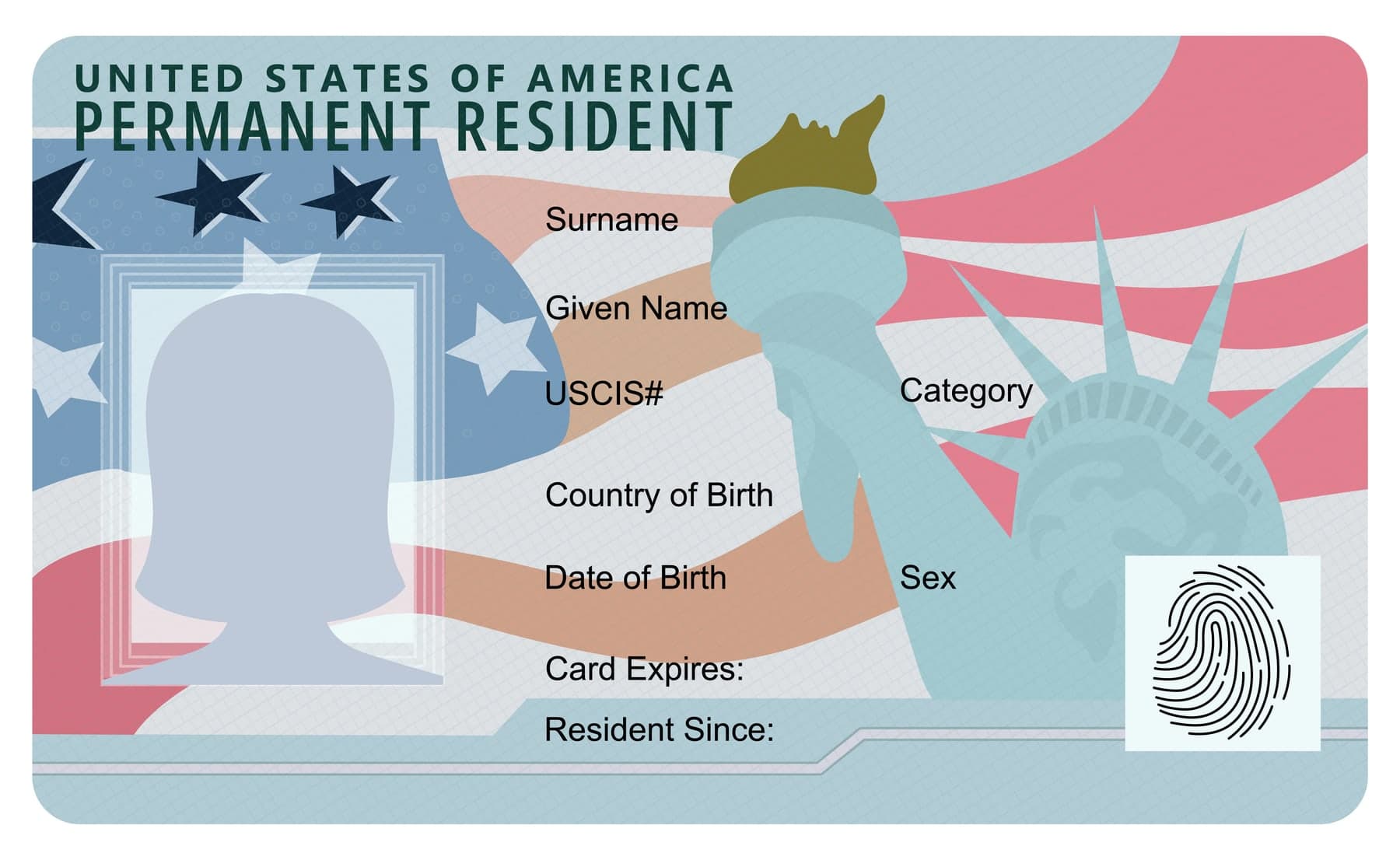
Permanent residence, self-petitioned
No job offer or sponsor needed
A major award, or the USCIS criteria
USCIS action within 15 business days
General information about EB-1A eligibility; not legal advice.
Why the EB-1A
No employer or job offer is needed. You file on your own behalf, and you control the timing.

EB-1A has some of the shortest priority date waits of any Green Card category, and premium processing is available at the I-140 stage.

Your spouse and children under 21 receive Green Cards with you, with a path to citizenship.
Who qualifies
The EB-1A rewards sustained recognition in your field, not a specific job title or a big-name employer. What matters most is how your achievements are documented.
Many people assume the EB-1A is only for Nobel Prize winners. In reality, founders, researchers, engineers, artists, and business leaders may already qualify without realizing it.
Research scientists and academics
Startup founders and entrepreneurs
Engineers and technical leaders
Artists and creatives
Athletes and coaches
Business and industry leaders
Reviewed by an immigration attorney
Not a quiz with a score. An immigration attorney reads every answer and tells you where you stand.
Prefer to talk first? Book a free call
Is it a fit?
May be a good fit if...
May not be a good fit if...
How USCIS evaluates it
You either hold a one-time major international award, or you meet at least three of the ten USCIS criteria. Here is what each one tends to look like.
Recognized prizes for excellence in your field. For example: national or international industry awards.
Associations that admit on outstanding achievement. For example: fellowships or invitation-only bodies.
Coverage about you and your work. For example: features in major or trade press.
Assessing peers in your field. For example: reviewing papers, judging competitions, or panels.
Work of major significance that others have taken up. For example: a product, method, or research with real impact.
Authored work in serious outlets. For example: journal papers or major industry publications.
Your work shown at artistic showcases. For example: gallery shows or curated exhibitions.
A key role at a distinguished organization. For example: a founding or senior role at a known company or lab.
Pay clearly above your field's norm. Shown through contracts, pay records, or reliable salary data.
Success in the performing arts. Shown through box office, sales, or streaming figures.
Meeting three criteria is the first step. USCIS then looks at your record as a whole to confirm sustained acclaim, known as the final merits review. Which criteria your record meets, and how they are evidenced, is confirmed for your case by the Law Offices of Jacob Sapochnick.
Criteria per 8 CFR 204.5(h).
How it goes
Your attorney starts with a strategy, so you both know what your case will be built on. From there you get a clear checklist and gather only the documents that matter. No guessing, and no time spent translating or sending papers that won't be used. Once everything is in place, the firm prepares your petition and files it with USCIS.
Timelines depend on timely document collection. With premium processing, USCIS acts on the petition within 15 business days. Green Card timing then depends on visa availability for your country, which the firm confirms at the start.
Your attorney maps your record to the criteria and decides what to build, including whether an O-1 first makes sense.
You gather awards, press, letters, and proof of your role, guided by the strategy, so nothing important is missed. This is the part that most affects your timeline.
Legal drafting, expert opinion letters, and petition assembly by the firm, once your documents are in place.
With premium processing, USCIS takes action on Form I-140 within 15 business days. Premium processing is an optional paid service; without it, standard processing times vary and are typically measured in months.
Once a visa number is available, you apply for the Green Card in the U.S. or at a U.S. consulate abroad. Your attorney prepares you for each step.
The finished petition
Your EB-1A is a complete, attorney-built petition: a clear legal argument, your evidence mapped to each criterion, expert opinion letters, and the case for sustained acclaim, assembled into one package. Here is what one looks like.
 0:18
0:18What a finished petition looks like
"You read that it's a visa for Nobel Prize winners and no one is good enough for it. What I found is that's not the case. They identified achievements I had even forgotten about."
Dmytro · EB-1A
From our attorney
Anna Fadul, Attorney at the Law Offices of Jacob J. Sapochnick, answers the questions applicants ask most: the things worth knowing before you file.
Anna · Attorney
Anna · Attorney
Anna · Attorney
More answers with attorney Anna coming soon.
Common questions
It means you are your own sponsor. You file the petition (Form I-140) on your own behalf, with no employer, no job offer, and no labor certification.
You only need to show that you plan to keep working in your field in the U.S. You are free to change jobs, start a company, or work for yourself along the way.
The EB-1A has two steps.
Step 1: the I-140 petition. USCIS decides whether you qualify as a person of extraordinary ability. With premium processing, an optional paid service, USCIS acts within 15 business days. Without it, this step typically takes several months.
Step 2: the Green Card itself. Once your I-140 is approved and your priority date is current, you apply for the Green Card. If you are in the U.S., this is Adjustment of Status (Form I-485), filed with USCIS. If you are abroad, it is the immigrant visa process, through the National Visa Center and an interview at a U.S. consulate. This step usually takes several months, depending on where you file.
For most countries, EB-1 priority dates are current or close to it, so step 2 can start soon after approval. For some countries, such as India and China, there is a wait. The firm checks the latest Visa Bulletin and gives you a realistic timeline.
Yes. Your spouse and unmarried children under 21 can receive Green Cards as part of your case.
They do not need to meet the EB-1A criteria or show any achievements. They need to prove the family relationship, with a marriage or birth certificate, and go through the standard steps everyone completes: a medical exam and background checks. If a child is close to turning 21, tell your attorney early; in some cases the law protects their eligibility.
Yes, you can reapply. There is no waiting period and no limit on how many times you can file. A past denial does not ban you.
What matters is fixing what went wrong. Your attorney reads the denial notice, sees which criteria or points USCIS questioned, and strengthens that evidence before filing again. In some cases a motion or an appeal is an option instead, but these have short deadlines, usually about 30 days, so share the notice as soon as you can.
Your place in the Green Card line. For the EB-1A, it is the date USCIS receives your petition.
Every month the Department of State publishes the Visa Bulletin, which shows whose priority dates can move forward, by category and country. When your date is current, you can take the final Green Card step. A good detail to know: once your petition is approved, you can usually keep that priority date even if you file another Green Card petition later.
Free evaluation
Send us your background and the Law Offices of Jacob Sapochnick will look at your full profile and tell you honestly which path fits, not just this one, before you commit to anything.